


Metal Lighted Letters Scene Configuration Solutions
 Aug 26, 2026|
 View:38
Products from the same lighted letters factory can deliver vastly different results and service lives when installed in different locations. The issue is rarely about product quality itself, but whether the configuration matches the actual application scenario. Chain stores and independent shops have different priorities, and the solutions for office building lobbies versus high-rise rooftops are also distinctly different. Below, five typical commercial scenarios are selected to break down the configuration logic and practical reference solutions for each.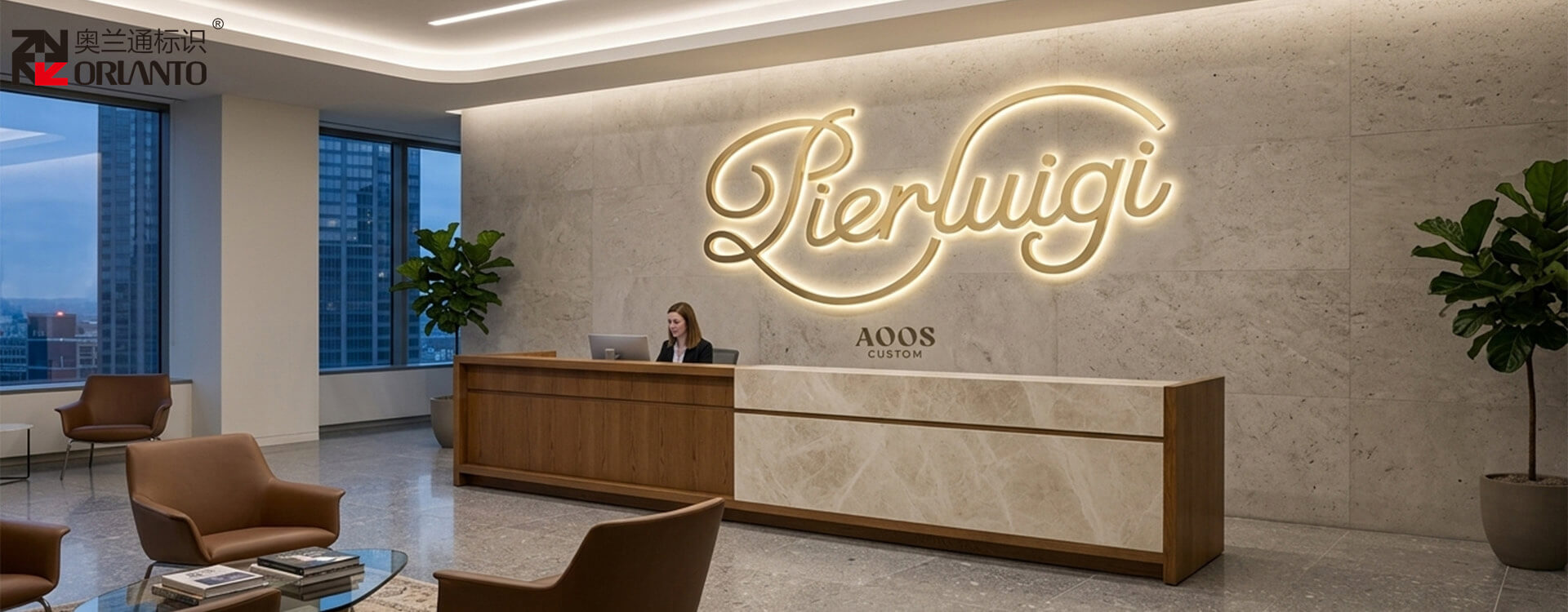
Chain stores are numerous and geographically dispersed, with varying on‑site installation conditions. However, the brand requires strict visual consistency across all locations. All storefront lighted letters must look identical – uniform surface color during the day and consistent color temperature and brightness at night, with no noticeable differences between stores.
The core of the entire solution is standardized control. All stores use the same batch of LED light sources and uniform manufacturing processes to ensure consistent color temperature, brightness, and appearance.
304 stainless steel is the preferred material, with front‑lit illumination and a brushed or painted finish. Color temperature must strictly follow the brand's VI specifications, for example, pure white 6500K or warm white 4000K, rather than simply specifying "white."
During procurement, it is essential to confirm that the factory uses the same batch of LED modules to avoid color temperature differences between batches. For mass production, letter sizes, stroke structures, and mounting methods must be fully standardized, so that future store expansions can directly replicate the same standard.
304 stainless steel housings, front‑lit, brushed or painted finish, brand‑specified color temperature LEDs, same‑batch light sources, mass production ensures visual consistency across multiple stores.
Independent shops lack built‑in brand traffic, so the storefront sign is the key to attracting foot traffic. Priority is given to visibility and nighttime readability, with refinement taking a secondary position.
Ensure sufficient light output for clear long‑distance visibility. Use high‑brightness LEDs with front‑lit illumination, and increase LED density by 20% to 30% compared to standard configurations. The conventional density is 80 to 100 LEDs per square meter; for independent shops, it is recommended to increase to at least 120 LEDs per square meter.
Pure white 6500K is preferred for color temperature, as it offers better long‑distance recognition. Warm white or yellow light tends to appear dim from a distance and is not suitable for street‑front shops aimed at attracting passersby.
304 stainless steel housings are recommended, with sheet thickness no less than 1.0mm; large‑sized letters should use 1.2mm to reduce the risk of deformation over long‑term use. A brushed finish is preferred over mirror polishing, as it is more resistant to dirt and easier to maintain.
304 stainless steel housings, front‑lit, high‑density LED modules, pure white 6500K, high‑brightness setup, housing thickness 1.0mm or above, brushed finish.
Lighted letters are installed on exterior walls or in lobbies, where viewing distances are short and viewers can examine details up close. The emphasis is on overall texture rather than extreme brightness. A common mistake is using exposed‑LED (perforated) letters in these settings, where the exposed lamp beads appear rough up close and lower the overall space quality.
Back‑lit letters are a better choice for high‑end scenarios. The light source is placed behind the housing, and light diffuses through the gap between the housing and the wall, creating a soft glow. During the day, the metal housing itself provides texture; at night, the glow enhances the atmosphere without being harsh or overpowering.
The housings require precision craftsmanship – laser cutting combined with argon arc welding, smooth edges without burrs, and a brushed or black titanium finish. Brushed stainless steel offers a restrained elegance, while black titanium conveys a premium feel, suitable for tech companies and luxury hotels.
Warm white 4000K is recommended for color temperature, as it provides a warmer, more refined look compared to high‑brightness cool white. There is no need to push brightness too high – the soft glow effect takes priority.
Letter size should be proportionate to the wall surface, and installation heights are typically at or slightly above eye level, so the finishing details must withstand close inspection.
Note: Back‑lit letters are better suited for indoor or sheltered exterior wall applications. For fully exposed outdoor environments, waterproofing and wind‑load risks associated with off‑wall gaps must be evaluated.
Precision stainless steel or aluminum housings, back‑lit, brushed or black titanium finish, warm white 4000K, soft glow effect prioritized, precision craftsmanship ensures high‑quality details.
Lighted letters are installed on rooftops or high‑rise facades, with viewing distances reaching hundreds of meters. Long‑distance recognition is critical. High‑altitude environments demand rigorous product performance – wind resistance, seismic resistance, and corrosion protection cannot be overlooked.
Brightness and light penetration are top priorities. Perforated (exposed‑LED) letters are the preferred choice for these scenarios. LEDs are embedded in holes drilled through the metal face panel, with light directly emitted outward. The luminous intensity is significantly higher than front‑lit letters, offering outstanding long‑distance recognition.
Aluminum sheet or 304 stainless steel can be used for housings. Aluminum is lightweight, rust‑proof, easy to perforate, and has lower wind load, making it a common choice for rooftop projects. Stainless steel offers higher structural strength for projects with strict wind‑resistance requirements.
Letter size should be calculated based on actual viewing distance. As a general guideline: for every additional 100 meters of viewing distance, letter height should increase by 30 to 50 centimeters. For clear readability at 200 meters, the letter height should be at least 1.5 meters. Housing thickness should be at least 1.2mm, with internal reinforcement ribs to improve structural stability under high‑wind conditions.
A fluorocarbon (PVDF) coating is recommended for the surface, offering superior weather resistance and UV protection compared to standard paint, reducing the risk of fading and peeling at high elevations. High‑grade branded LEDs with IP68 protection rating should be used, capable of operating in temperatures ranging from ‑40°C to 80°C.
High‑altitude projects cannot rely on experience alone – installation structures must be verified through engineering calculations based on local wind load standards. Some projects may require formal structural calculation reports.
Note: Perforated letters used outdoors will accumulate dust over time and require regular cleaning and maintenance. Even when using stainless steel in coastal salt‑spray areas, proper surface protection is still necessary.
Aluminum or 304 stainless steel housings, perforated (exposed‑LED) illumination, fluorocarbon coating, high‑brightness LEDs, IP68 waterproof rating, letter size calculated according to viewing distance, internal reinforcement ribs, wind‑load structural verification.
Restaurants and bars do not require maximum brightness – the priority is creating a comfortable and inviting atmosphere. Industry experience shows that warm color temperatures are more effective at enhancing the dining and social atmosphere and are more likely to attract customers.
Color temperature should be in the warm range of 3000K to 3500K. For restaurants, front‑lit letters can be used, with warm light evenly diffusing through the panel to align with the interior lighting atmosphere. For bars, back‑lit letters are often preferred, as the projected glow on the wall complements darker environments.
304 stainless steel housings are recommended, with a brushed or antique copper finish. The antique copper finish adds a vintage texture, suitable for craft beer bars, Japanese restaurants, and cafés. Brushed stainless steel is more versatile and fits most food and beverage concepts.
Bold typefaces are recommended for lettering, with sufficient stroke width to ensure full and even illumination. Thin‑stroke letters have insufficient light‑emitting surface area and tend to look underwhelming at night.
304 stainless steel housings, front‑lit or back‑lit, warm light 3000K to 3500K, brushed or antique copper finish, bold typeface to ensure full and even illumination.
Chain Stores: 304 stainless steel, front‑lit, brushed or painted, brand‑specified color temperature, standardized batch delivery
Independent Shops: 304 stainless steel, front‑lit, brushed, pure white 6500K, high‑density LEDs, thickness 1.0mm+
High‑End Office Buildings & Hotels: Precision stainless steel or aluminum, back‑lit, brushed or black titanium, warm white 4000K, precision craftsmanship, glow effect
High‑Rise Landmarks: Aluminum or 304 stainless steel, perforated (exposed‑LED), fluorocarbon coating, pure white 6500K, size calculated by distance, structural calculation
Restaurants & Nightlife: 304 stainless steel, front‑lit or back‑lit, brushed or antique copper, warm light 3000K‑3500K, bold typeface
When selecting metal lighted letters, focus on three core dimensions.
Installation location determines the lighting method. Storefronts favor front‑lit for strong three‑dimensional presence; rooftops and high elevations favor perforated (exposed‑LED) for greater visibility; close‑up refined displays favor back‑lit for its glow effect.
Viewing distance determines letter size and brightness level. The farther the viewing distance, the larger the letters and the higher the brightness required.
Brand positioning determines color temperature and surface finish. Premium projects often use back‑lit with warm white for an understated elegance; high‑traffic street‑front stores use front‑lit with pure white for direct recognition; food and beverage venues prioritize warm light to create atmosphere.
Once you have clarified the installation location, viewing distance, and brand positioning, the overall selection direction is largely defined. The remaining step is to match the hardware configuration to the corresponding scenario.
If you are planning a lighted letters project and need specific selection guidance based on site conditions and brand requirements, feel free to reach out for a tailored recommendation.
Q: Can back‑lit letters be used directly in fully exposed outdoor environments?
A: They are better suited for indoor or sheltered exterior walls. For fully exposed outdoor use, waterproofing and wind‑load risks associated with off‑wall gaps must be assessed. It is not recommended to directly apply indoor configurations to outdoor settings.
Q: Is maintenance difficult for perforated (exposed‑LED) letters?
A: Outdoor environments accumulate dust and dirt, and LEDs have a limited lifespan. Regular inspection and cleaning are required. When planning project budgets, ongoing maintenance costs should be factored in.
Q: Is 304 stainless steel sufficient for coastal salt‑spray environments?
A: 304 stainless steel offers good corrosion resistance, but in severe salt‑spray conditions, there is still a risk of corrosion. High‑grade surface treatments and additional protective measures are necessary to ensure long‑term performance.


